Basics
Internet abroad – eSIM, SIM, Wi-Fi, Starlink at a glance
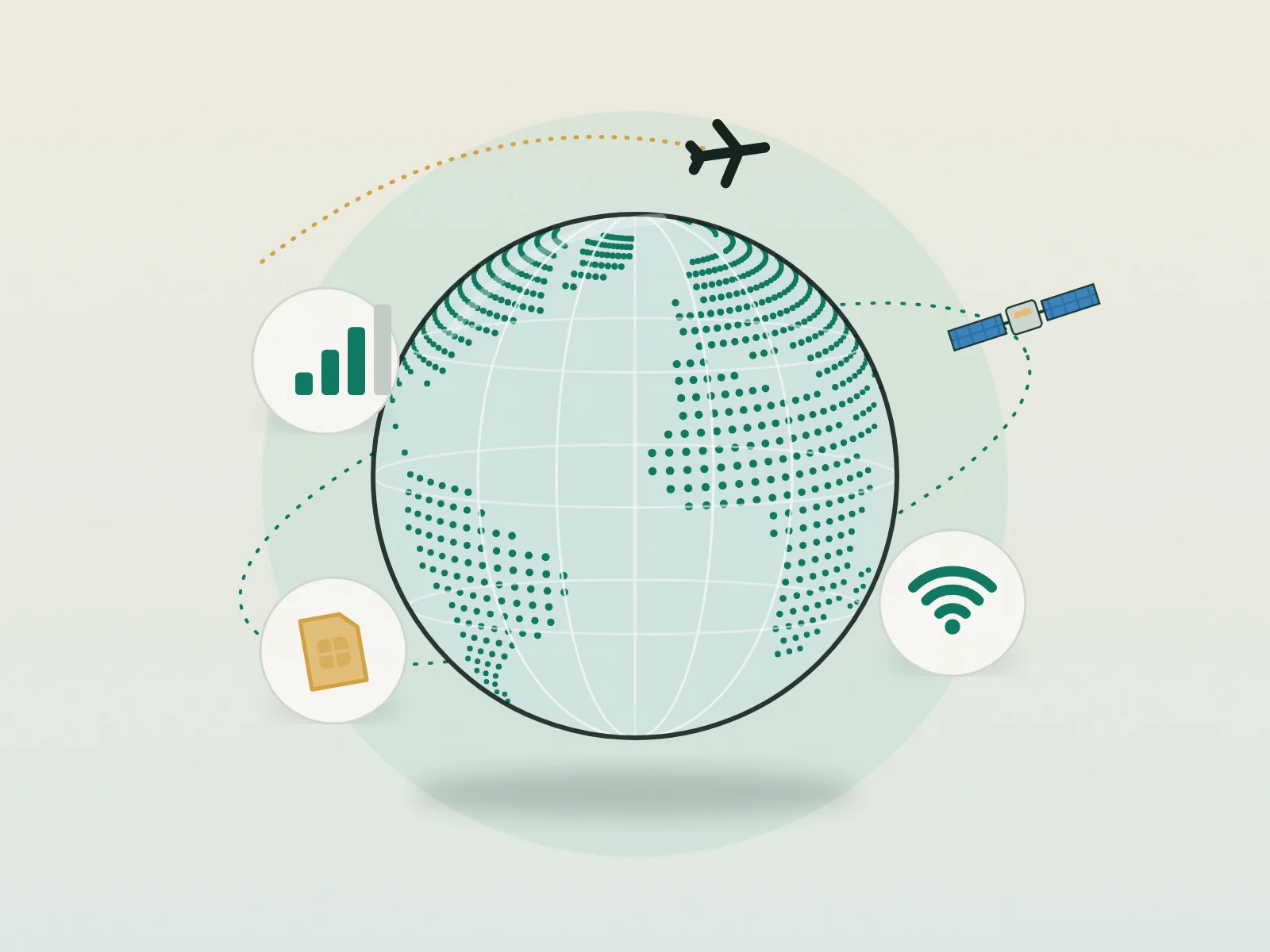
Roaming, eSIM, local SIM, Wi-Fi or satellite? Which solution fits when – from a beach holiday in Italy to a dead zone in Brazil.
Contents
This article contains advertising (affiliate) links, marked “Ad”. How we label ads
In short: In the EU (plus Iceland, Liechtenstein, Norway) „Roam like at home“ means you usually surf at domestic rates – the rule has been extended to 2032. Outside, a travel eSIM or local SIM is almost always cheaper than roaming. Wi-Fi is convenient but not always reliable. Starlink is the answer for places without mobile coverage. As of October 2026.
Five ways to get online
| Option | Good for | Watch out for | Effort |
|---|---|---|---|
| EU roaming | Travel within the EU/EEA | Possible fair-use limits on unlimited plans; Switzerland and UK can be expensive | none |
| Travel eSIM | Countries outside the EU, round trips | eSIM-capable, unlocked phone; validity/data | low |
| Local SIM | Longer stays, lots of data | Passport registration, shop visit, possibly a new number | medium |
| Wi-Fi | Accommodation, cafés, coworking | Security (VPN), variable quality | low |
| Starlink | Dead zones, camper, boat, cabin | Hardware, power, plan rules, licensing in the country | high |
1. EU roaming: usually the easiest option in Europe
Since 2017 „Roam like at home“ applies in the EU: you call and surf in other EU countries on your home plan’s terms. The regulation has been extended to 2032 and also covers Iceland, Liechtenstein and Norway (EEA).
Three pitfalls to know:
- Fair use: with very large or unlimited data plans the carrier may set a roaming cap. It’s in the plan terms.
- Permanent stays: roaming is meant for temporary travel. Living abroad for months can trigger surcharges.
- Non-EU countries in Europe: Switzerland, the UK, Turkey, most non-EU Balkan states, Andorra and Monaco can be expensive depending on your plan. Check it or take a travel eSIM.
Also expensive: mobile data on ferries and cruise ships (satellite network on board) – better switch off data roaming there.
2. Travel eSIM: almost always cheaper outside the EU
You install a travel eSIM via QR code before departure and use it for data at your destination. Your home SIM stays active for calls and SMS codes. Benefits: no shop, no local registration, often online as soon as you land. Details and step-by-step guide: Travel eSIM explained – internet without swapping SIM cards.
Our own choice is usually Holafly – we’ve used 13 eSIMs since 2024, including the USA, Brazil, Malaysia, Morocco, the UK and Russia. Code JANPEM4IDSKH gives 10% off. For Thailand and Southeast Asia we recommend AIS.
3. Local SIM: for longer stays
If you stay weeks or months in one country, a local SIM or eSIM from a local carrier is often cheapest – especially with heavy data use. Expect a shop visit, passport registration and sometimes waiting. In some countries registration for foreigners is complicated or time-limited.
4. Wi-Fi: convenient, with caution
Hotel, café and rental Wi-Fi is fine for much – but not always for video calls. Quality varies a lot and in the evening many guests share the line. For logins and banking: use a VPN and two-factor authentication, and don’t send sensitive data over open networks without encryption.
5. Starlink: when there’s no network
Where mobile coverage is missing – remote beaches, mountain valleys, boats, holiday homes without a landline – Starlink delivers internet via satellite. The Starlink Mini fits in a backpack but needs a clear view of the sky and 25–40 W of power on average. For Austrian accounts: no time limit within Europe, outside at most 30 consecutive days with travel registration – Starlink outside Europe – the 30-day rule and travel registration. Whether Starlink is licensed at your destination: Countries with Starlink coverage – and where it’s not allowed.
Decision guide by trip
| Trip | Recommendation |
|---|---|
| Holiday in the EU | Use your home plan, check fair use |
| Switzerland, UK, Turkey | Travel eSIM or your carrier’s add-on |
| Long-haul (USA, Asia, South America) | Travel eSIM – see Travel eSIM explained – internet without swapping SIM cards |
| Thailand, Southeast Asia | AIS traveller SIM/eSIM or travel eSIM |
| Months in one place outside the EU | Local SIM |
| Remote work with important calls | eSIM + a second connection (Wi-Fi or Starlink) |
| Remote areas, camper, boat | Starlink plus eSIM – see eSIM or Starlink? What pays off when |
Estimating data
The eSIM data calculator works out how much you need with reference values. Rule of thumb: navigation and messengers need little, an hour of video calls many times more, HD streaming even more.
Common mistakes
- Leaving data roaming on your home SIM outside the EU – an expensive surprise.
- Installing the eSIM at the airport – without Wi-Fi it often fails.
- Carrier-locked phone – then no foreign SIM or eSIM works.
- Relying only on hotel Wi-Fi before an important meeting.
- Taking Starlink to the wrong country – check licensing and import rules first.
FAQ
Does EU roaming apply in Norway and Iceland?
Yes, as part of the EEA, Norway, Iceland and Liechtenstein are covered by the roaming rules.
Is hotel Wi-Fi safe?
Public Wi-Fi is a risk. Use a VPN and two-factor authentication.
Does EU roaming apply in Switzerland?
No, Switzerland is not part of the EU roaming rules. Some plans include it anyway – check your contract.
Do I need a new phone number for an eSIM?
No. Travel eSIMs are usually data-only; your number stays on your home SIM.
Sources
Read next
Starlink
Starlink Mini for travel – costs, plans, pausing
What the Mini can do, what it costs per month, why a 30-day limit applies outside Europe since summer 2026 – and how to let the service rest cheaply between trips.
Power
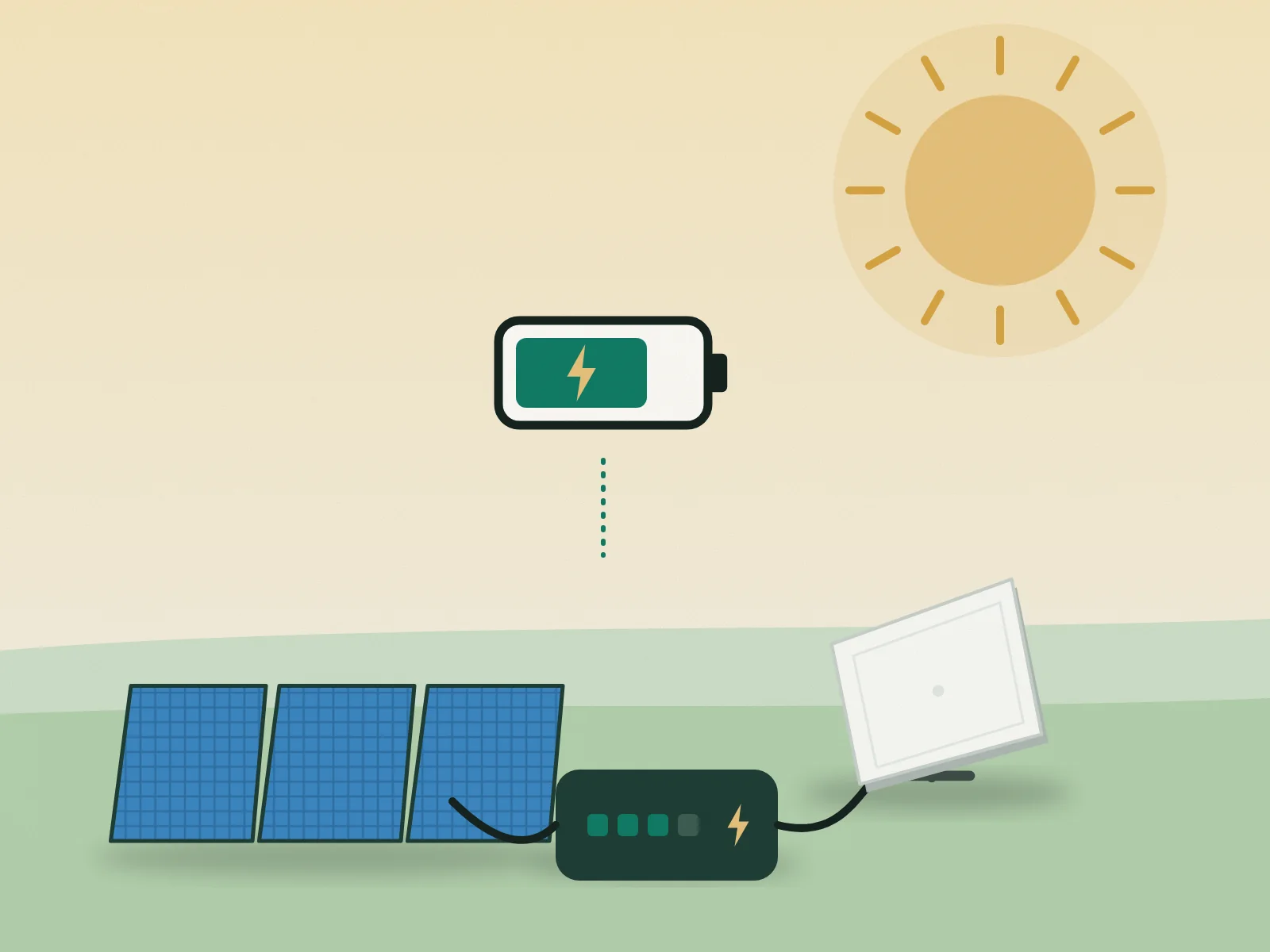
Powering the Starlink Mini on the road – power bank, power station, solar
The Mini draws 25–40 watts on average. What that means for power banks, power stations and solar – with a simple formula and a runtime table.
Starlink
Buying a Starlink Mini in Austria – direct, retail, referral link
Directly from Starlink or from an electronics retailer? What to know before buying the Starlink Mini in Austria – from price to activation.